VAST Research on Trusteeship
Trusteeship in Stoke-on-Trent: What we learned from local organisations
The voluntary, community and social enterprise (VCSE) sector depends on strong governance. Trustees play a vital role in governance; shaping organisations, overseeing finances, supporting compliance and ensuring charities deliver on their mission. Yet national research continues to highlight challenges around trustee recruitment, board diversity, and succession planning.
To better understand what these challenges look like locally, VAST recently brought together charity leaders and Trustees from across Stoke-on-Trent for a series of focus groups. The aim was simple: to explore whether the experiences of local organisations reflected national trends and to identify where additional support may be needed.
The findings revealed that while many of the issues reported nationally are very much present in Stoke-on-Trent, there are also clear opportunities to strengthen governance, improve board diversity, and create new pathways into trusteeship.
Trustee Recruitment Remains a Major Challenge
One of the strongest messages from the consultations was the difficulty organisations face when trying to recruit new trustees.
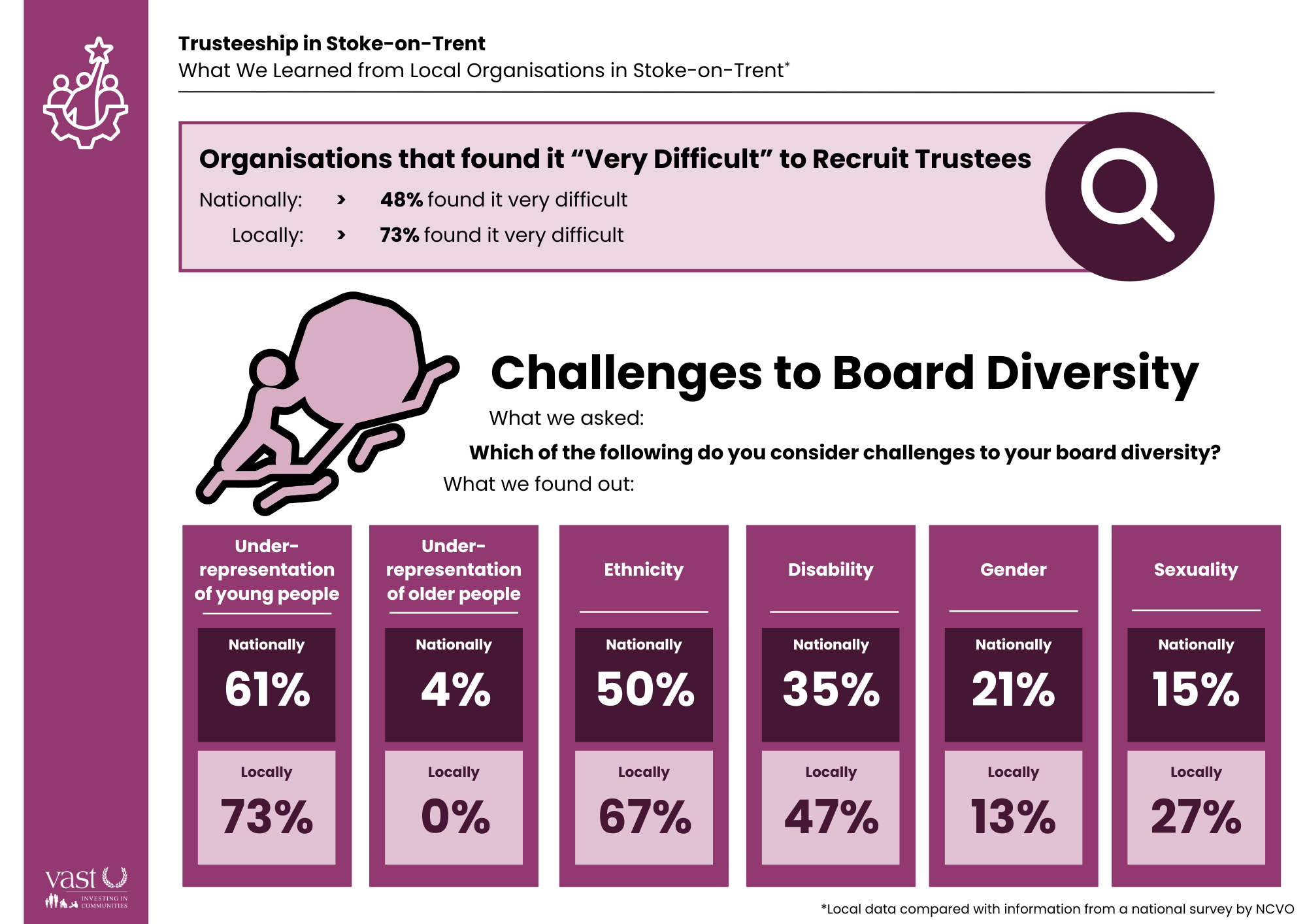
Many organisations reported significant vacancies, with some carrying enough to represent almost half of their current trustee board. Participants overwhelmingly described recruitment as difficult, citing low awareness of the trustee role, concerns about responsibility and accountability, and a lack of confidence among potential candidates.
Participants felt that many people simply do not understand what being a trustee involves. Governance, legal responsibilities and financial oversight can appear daunting, while misconceptions about the level of expertise required may discourage people who could otherwise make valuable contributions.
There was also recognition that time pressures continue to be a major barrier. With people balancing work, family commitments and wider financial pressures, volunteering at governance level can feel out of reach for many.
Diversity Continues to be an Area for Development
The discussions also highlighted ongoing concerns about board diversity across the local voluntary sector.
Participants most frequently identified the under-representation of younger people and people from ethnically diverse backgrounds on trustee boards. Disability representation was also highlighted as a challenge for many organisations. At the same time, participants stressed that diversity should go beyond demographics and include lived experience, different perspectives and stronger community representation.
Many organisations recognised that their boards do not fully reflect the communities they serve. However, there was also a strong willingness to address this and explore new approaches to recruitment.
Strengths in Governance, Gaps in Development
Trustees reported lower confidence in specific areas such as strategic planning, fundraising, digital skills, mentoring and board development. This suggests there is an appetite for additional support that goes beyond compliance and focuses on building resilient, future-focused organisations.
Training emerged as one of the most commonly requested forms of support, particularly around governance, leadership, diversity and inclusion, fundraising and succession planning.
Succession Planning is Often Overlooked
Another significant finding was the lack of formal succession planning across many organisations. Most participants reported that they did not currently have a structured plan for developing future board leaders or replacing key trustee positions. Instead, organisations tended to rely on informal arrangements, mentoring relationships or annual reviews.
While recruitment challenges often take priority, participants recognised that developing leadership pipelines for future Chairs, Treasurers and trustees is essential for long-term organisational resilience.
The Need for Greater Awareness and Stronger Pathways
Across every discussion, one theme appeared repeatedly: trusteeship needs to become more visible, accessible and better understood.
Participants called for clearer information, accessible resources, mentoring opportunities and stronger networks to help both existing and aspiring trustees. There was also strong support for creating pathways that enable volunteers, service users and community members to progress into governance roles.
The findings suggest that increasing awareness of trusteeship could help tackle many of the recruitment and diversity challenges identified by organisations across the city.
Looking Forwards
The focus groups confirmed that many of the governance challenges experienced in Stoke-on-Trent closely mirror those being reported nationally. Recruitment difficulties, representation gaps and succession planning concerns remain significant issues for many organisations.
However, the consultations also highlighted a sector that is committed to improvement and keen to invest in stronger governance. Through training, mentoring, improved accessibility and wider community engagement, there is a clear opportunity to build more diverse, representative and resilient trustee boards across Stoke-on-Trent.
Most importantly, the conversations demonstrated a shared recognition that good governance starts with people, and that creating more accessible pathways into trusteeship will be essential in supporting the future of the voluntary sector locally.